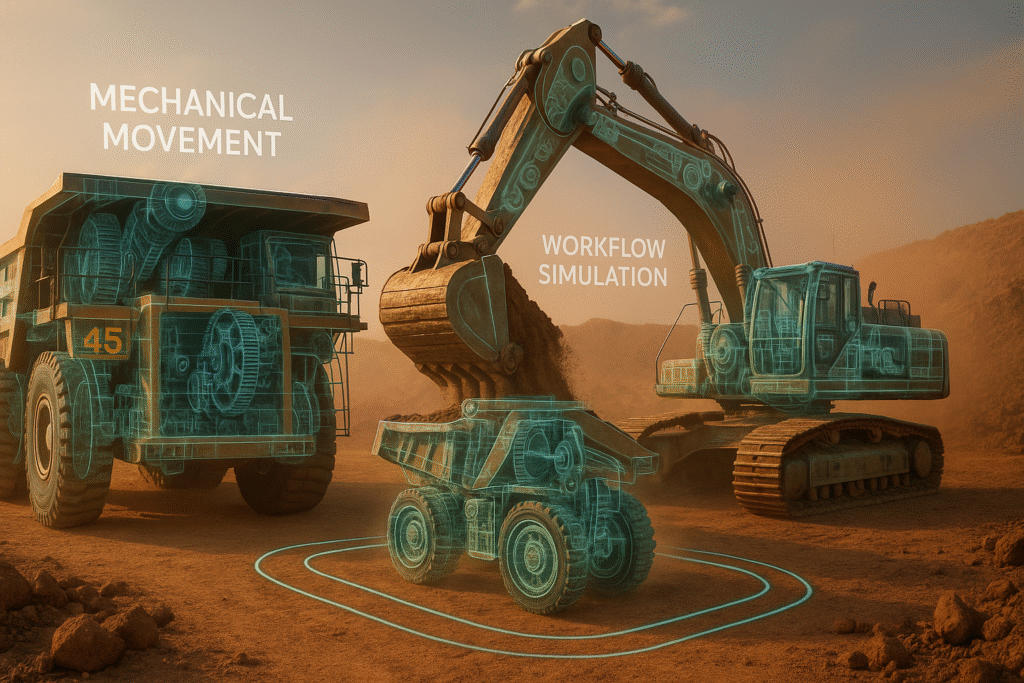
The Australian construction industry is moving into a new era of digital planning, and industrial 3d animation for construction has become one of the most valuable tools available. As projects grow larger and more complex, teams need better ways to visualize structures, understand heavy machinery operations, and communicate their plans clearly through interactive 3D models, which is where 3D animation allows for effective design and functionality. That is exactly what modern 3d animation and 3d visualization deliver. Instead of relying on traditional drawings, construction teams can now view detailed 3d models, interactive walkthroughs, and dynamic 3d simulations that explain every part of the project in a clear and accessible way.
This shift is not just about visuals. It is about improving communication, reducing costly mistakes, and giving construction crews a practical way to understand the entire workflow before stepping onto the job site through 3D animation that allows for better visualization of design and functionality. Whether it is a commercial build, mining facility, large-scale infrastructure project, or heavy machinery installation, 3d animation services help teams make smarter decisions and streamline the construction process.
The result is better planning, stronger stakeholder engagement, and more efficient construction projects across Australia. This guide explains how 3d construction animation works, the benefits of using 3d visualization, and why Australian companies are rapidly adopting this technology.
Why 3D Animation Matters in the Australian Construction Industry
Construction in Australia involves complex industrial processes, heavy machinery, and fast-moving schedules, all of which can be better managed with 3D animation that allows for clear visualization of design and functionality. As project sizes increase, the need for accurate communication becomes even more important, particularly when utilizing 3d tools. Traditional drawings cannot always clearly show spatial relationships or construction methodology, leading to misinterpretation and rework.
According to GroundBreak Carolinas, poor project data and miscommunication account for 48 percent of all construction rework, making visual tools like 3D animation essential for improving clarity and reducing errors. These improvements come from using 3d rendering, 3d design, and construction animations that visually explain the construction workflow.
The benefits reach far beyond design. 3D animation for heavy machinery helps crews understand equipment movement and placement, crucial for successful product assembly. Animation uses realistic sequences to simulate lifting, assembly, and installation. These visual tools improve training, site planning, and decision making for tasks that are often difficult to explain using static drawings, especially through immersive 3D experiences.
3D Industrial Animation That Supports Complex Construction Projects
Industrial 3d animation has become a powerful tool for helping Australian teams visualize projects accurately. When dealing with complex industrial sites or advanced building construction, traditional plans do not always communicate the full picture. Detailed 3D visualization fills this gap in understanding design projects and their complexities. According to Autodesk, 3D visualization improves collaboration, boosts productivity, and reduces costs by allowing designers and engineers to evaluate early-stage designs, test ideas, and identify issues before any physical prototyping is required.
Visualizing entire building projects in clear 3D
A complete 3d model helps teams understand how every component fits together. This includes exterior and interior design elements, structural details, and heavy machinery placement. Seeing the final construction in realistic form helps improve coordination and planning.
Understanding spatial relationships and construction materials
3D construction animation helps teams interpret scale, spacing, and alignment in a way that is much clearer than flat drawings, making use of sophisticated 3D techniques. Material textures, finishes, and lighting are represented through 3D rendering, giving a realistic preview of the final result, which enhances the product features.
Simulating construction workflow and installation methodology
Animation allows project managers to simulate sequences such as steel erection, crane movements, and assembly steps. Teams can explore 4D planning where timelines and construction sequencing are added to the visual model, creating a more complete understanding of the entire process, especially when utilizing quality 3D tools.
Showcasing industrial products and machinery operations
Product animation allows manufacturers and construction teams to demonstrate how machinery functions. Demo animation makes complex assembly and equipment operations easy to understand. This is why 3d animation enhances industrial equipment demonstrations and improves communication for workers and clients.
Supporting design changes and finalizing the design
Because the models are digital, updates can be made quickly. New layouts, modified structures, and construction material updates are easy to review with 3d product animation. This helps teams finalize the design with confidence.
3D Animation and Visualization for Australian Construction Teams
Industrial 3d animation helps construction teams understand designs, workflows, and equipment functions in a clear and practical way. This brings major improvements to how teams plan and coordinate building projects.
Better communication with stakeholders
Using 3d animation services allows everyone to view the same model. This eliminates confusion and improves collaboration. When clients and investors can see realistic animation videos, they gain confidence in the project, particularly through immersive 3D presentations. This is why 3D animation for client presentations and 3D animation boosts investor confidence in a competitive construction market have become valuable across the industry.
Clearer approvals and presentations
Construction projects often need detailed explanations, especially when utilizing 3d visual aids. 3d animation provides a simple way to showcase design options and operational details. This speeds up approvals because the visuals are easy to understand.
Improved worker training and site preparation
Workers can study 3d animation video demonstrations that show equipment operation, assembly steps, safety zones, and workflow sequences. This is extremely useful for heavy machinery installations, mining operations, and industrial construction tasks through immersive simulations.
Enhanced safety and planning
Construction animations help simulate risks before reaching the job site. Teams can evaluate crane movement, machinery access, and material loading areas safely in a digital environment.
Benefits of 3D Animation and 3D Visualization in Construction
Faster planning and better coordination
3d visualization reduces the time spent interpreting or explaining drawings. Teams understand the design faster, which improves productivity.
Stronger problem solving and early detection of design flaws
3d animated models highlight issues long before construction begins. Engineers can fix structural or spatial problems early, saving both time and money.
Lower risk and fewer delays
Clearer visuals lead to fewer misunderstandings. Workflows are more coordinated, and delays are reduced because teams share a consistent understanding of the build.
Higher quality design through advanced 3d tools
3d architectural animation improves architectural visualization, interior design previews, and concept development by leveraging 3d technology. It supports designers and construction managers in finalizing their plans more accurately.
More impactful stakeholder presentations
Dynamic 3d animations and walkthroughs make presentations far more engaging. Stakeholders can see the entire project visually instead of relying on technical interpretation of drawings.
Better understanding of complex industrial systems
Animation uses precise motion and sequencing to show how machinery operates. This makes complex industrial processes easy to understand and review.
The 3D Animation Process for Construction Projects
Here is the process table showing how animation involves each stage of design and construction.
How Construction Animations Are Created
| Stage | What Happens | How It Helps Construction Teams by leveraging 3d technology for better visualization and communication. |
|---|---|---|
| Initial design review is enhanced with 3D building models to provide a clearer vision of the project. | Animation teams collect drawings, models, 3d bim model files, and technical details. | Ensures accuracy and creates a reliable foundation for the animation. |
| Creating the 3d model | A detailed 3d model of the building or machinery is produced. | Helps teams visualize the project and understand spatial layout. |
| Adding materials and textures | Construction materials and finishes are added digitally, enhancing the immersive quality of the 3d video. | Creates realistic previews of the final look. |
| Animation sequencing is essential for presenting product features and ensuring clarity in complex workflows. | Movements, assemblies, and workflow steps are animated using advanced animation software for enhanced clarity, showcasing intricate details of the construction process. | Helps simulate construction methodology and identify potential issues. |
| 4D scheduling simulation with immersive 3D elements allows for better visualization of project timelines. | Timeline information is added to the 3d model. | Improves scheduling accuracy and workflow coordination. |
| Lighting and rendering | Lighting, shadows, and environment details are applied. | Produces high quality visuals for presentations. |
| Review and design changes are facilitated by leveraging 3d technology. | Teams evaluate the animation and request updates to ensure the 3D walkthrough meets all project specifications. | Supports design changes and final approval through detailed animation. |
| Final 3d animation video showcasing an immersive experience. | Delivered as a video or interactive walkthrough. | Useful for training, planning, and stakeholder presentations, particularly when showcasing sophisticated 3D models. |
Using 3D Construction Animation Across Australian Projects
3d construction animation is used widely across mining, infrastructure, commercial building, manufacturing, and transportation projects. Mining operations use 3d animation for heavy machinery to plan drilling paths, machinery movement, and safety procedures. Commercial builders rely on interactive 3d architectural visualization to present interior and exterior layouts. Infrastructure developers use advanced 3d models to communicate complex projects such as bridges, tunnels, and transport networks.
The entire construction business benefits from using 3D tools that simplify complex ideas and showcase detailed 3D concepts visually, enhancing product development and facilitating product assembly.
What Does This Mean for the Future of Construction in Australia
Industrial 3d animation for construction is reshaping how Australian construction teams plan and deliver projects. With the ability to visualize builds clearly, simulate workflows, detect issues early, and communicate designs better, teams can work more efficiently and deliver higher quality outcomes, especially through product demonstrations using 3D animation. Whether planning heavy machinery operations, explaining industrial processes, or presenting architectural concepts, 3d animation offers a powerful tool that strengthens every stage of construction.
As Australia continues delivering advanced infrastructure and industrial buildings, the use of 3d visualization and construction animations will only continue to expand. This leads to safer, clearer, and more efficient construction planning across the entire industry.
If your team is ready to visualise complex builds with clarity, discover industrial 3D animation solutions.
FAQs: How Industrial 3D Animation Helps Australian Construction Teams
What is the purpose of 3D animation and visualization systems?
3d animation and visualization systems are used to present construction designs, machinery operations, and workflow sequences in a clear and realistic format. They allow construction teams and stakeholders to understand the project visually instead of interpreting complex drawings. These systems improve planning accuracy, communication, and training across all stages of design and construction, particularly in actual construction scenarios.
How did 3D modeling impact the construction method?
3d modeling helps teams detect design issues early, review detailed 3d structures, and evaluate workflows before building begins. This reduces rework, improves coordination, and leads to more efficient construction planning. It also allows designers to test ideas, adjust layouts, and finalize the design in a more accurate and flexible way, showcasing intricate aspects of the project.
How is the concept of 3D technology used in the construction industry to create architecture?
3d technology is used for architectural visualization, construction animations, interior design previews, and detailed modeling of building components. It helps architects present design options to clients and assists builders with planning site logistics, machinery placement, and workflow sequencing. This creates smoother collaboration between all parties involved in construction, facilitated by quality 3D visuals.
What advantages are available with 3D drawings for the construction crew?
Construction crews benefit from clearer instructions, better spatial awareness, and more accurate visual guides. 3d drawings show exactly how components connect, how machinery fits on site, and how workflows should progress. This helps reduce guesswork, improve safety, and increase the overall efficiency of the construction process.
What is 3D industrial animation?
3D industrial animation is a visual technique that simulates machinery operations, industrial processes, and construction workflows using detailed 3D imagery, allowing for the effective presentation of product features. It creates realistic animation sequences that show how parts move, assemble, and function together. This helps teams understand complex industrial tasks before they are performed on site, improving both training and planning.