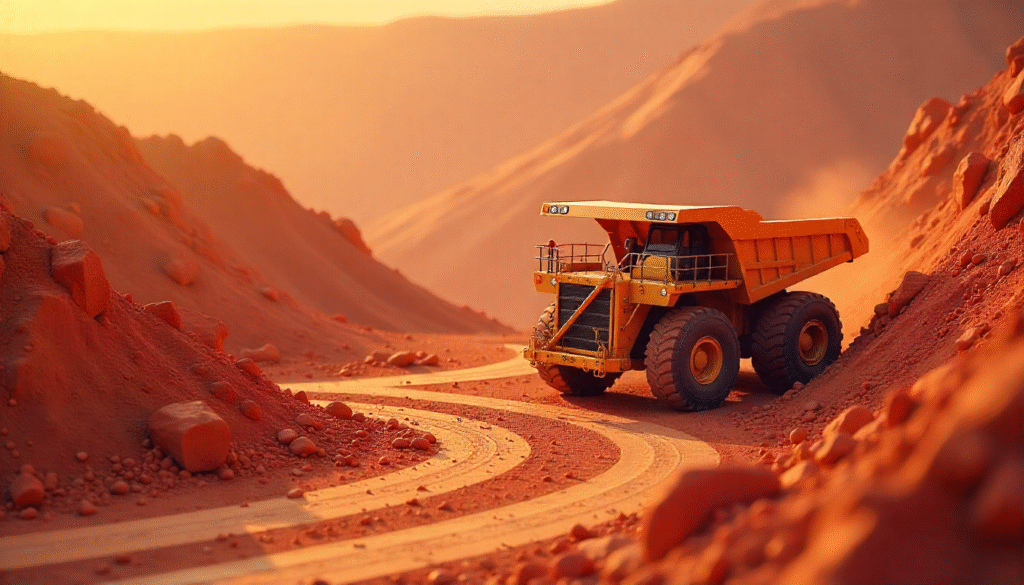
Australia’s mining industry moves fast, and everyone from engineers to EPC teams needs a clear way to explain what’s happening on-site. That’s why so many mining companies now lean on 3D animation, 3D visualization, and interactive mining 3D tools. Instead of trying to explain a complex process with diagrams or long documents, a simple animation or video can show the entire operation in a clear, visual way.
Across Western Australia, Queensland, and the NT, teams use these 3D tools to walk through machinery functions, ore movement, and industrial workflows. It’s much easier to show how a crusher works, how a haul truck moves through the pit, or how a processing plant runs when everything is presented inside a clean visual environment. These visuals help reduce mistakes, speed up training, and make communication between contractors, engineers, and supervisors much smoother.
For an industry built on precision and heavy resource operations, having strong visual presentation tools isn’t just “nice to have.” It’s becoming a practical solution for the mining industry, helping everyone stay aligned, understand expectations, and see the big picture through clear 3D visualization and animation.
The Rise of 3D Animation in the Australian Mining Sector
Australia’s mining sector has always been quick to embrace new technology, whether it is autonomous haul trucks, digital twins, or remote operations centres. Now there is a clear shift toward using 3D animation and 3D visualization to simplify complex mining processes. Across Western Australia, Queensland, New South Wales, and the Northern Territory, mining companies manage large resource operations that involve detailed engineering plans, underground procedures, and safety-critical workflows.
Traditional documentation, such as long PDFs, 2D diagrams, and technical drawings, is often difficult for teams to interpret. This is why many operators are choosing mining 3D visualization as a practical solution. A well-made animation or video provides a strong visual explanation of how a process works and how tasks should be completed across the mining environment.
Instead of guessing what a system looks like, teams can see a realistic presentation of equipment, movement, and industrial procedures. It is faster, clearer, and far more effective for communication in an industry where accuracy and understanding matter every single day.
Common areas where Australian mining companies use 3D animation services include:
-
ore processing explanations
-
mining project approvals
-
equipment demonstrations
-
hazard identification and safety procedures
-
contractor and workforce training in virtual environments for enhanced safety
-
investor communication
3D animation has become an essential visual tool for enhancing communication and improving understanding across the entire mining project lifecycle.
Why the Mining Industry Is Turning to 3D Visualization and Digital Animation
The Australian mining industry handles large volumes of technical information such as geological data, ore processing procedures, plant design, and complex engineering requirements. Turning this information into clear visual content makes it much easier for engineers, managers, and non-technical stakeholders to understand.
As mining operations continue to move toward automation and digital transformation, companies increasingly rely on digital 3D visualization to support better communication. These visual tools help teams:
-
simplify engineering explanations
-
support major mining project planning
-
visualise underground operations
-
improve contractor alignment
-
reduce communication errors that can affect operations
This shift toward better visual communication has helped 3D animation grow rapidly across the Australian mining sector, enhancing investor relations.
How 3D Animation Services Enhance Technical Communication in Mining Projects
Mining projects often involve multiple parties including EPC contractors, equipment suppliers, geologists, project managers, regulators, and client teams. When all stakeholders can view the same 3D animation, the chances of miscommunication drop significantly.
3D animation improves understanding for:
-
equipment installation processes
-
material flow and ore movement
-
safety zones and hazard areas
-
plant layout and engineering design
-
critical step by step operational procedures
Clear visual explanations help mining companies streamline project communication and create stronger alignment across engineering, safety, operations, and management teams during trade shows, ultimately benefiting investor relations.
How 3D Visualization Helps Explain Complex Mining Processes
Mining operations in Australia involve many technical steps that can be difficult for teams to understand through text alone. Complex ore processing circuits, underground movements, plant layouts, and engineering procedures often require a clear visual explanation. This is where 3D visualization becomes highly valuable. By converting technical data into visual 3D animation, mining companies can show exactly how a process works from start to finish.
Clear visual communication improves decision making and reduces misunderstandings across engineering teams, safety personnel, equipment suppliers, and contractors who are working on the same mining project.
Visualising Ore Processing, Material Flow, and Industrial Procedures
Ore processing is one of the most complex parts of a mining operation. It often involves crushing, grinding, screening, flotation, separation, and refining procedures. A standard 2D diagram cannot fully show how material moves through each stage.
3D animation provides a clear visual representation of:
-
how ore enters each stage of the circuit, an explanation that can also foster better investor relations.
-
the direction of material flow
-
how equipment interacts with the process
-
industrial procedures that support quality control
-
potential bottlenecks or safety risks
Australian mining companies use these visual tools to improve training, support engineering accuracy, and help non technical stakeholders understand how the process works. This is especially helpful during feasibility studies and project approvals.
Explaining Underground Operations and Engineering Workflows Through Mining 3D
Underground mining environments contain many variables that are difficult to describe through text, making visual aids essential for effective investor relations. Engineers often need to show how equipment moves, how ground support is installed, or how ventilation and escape routes function.
Mining 3D visualization makes this easier by showing:
-
vehicle movement through underground tunnels
-
placement of support systems
-
blasting procedures and sequence
-
ventilation flow and air quality management
-
safe paths for workers during operations in virtual environments
These granular visual details help supervisors, operators, and trainees understand underground operations with greater confidence.
Communicating Technical Concepts to Non-Technical Stakeholders
Many mining projects require presentations to government regulators, investors, partners, and community groups. These groups often have limited engineering knowledge, which is why using 3D mining in complex engineering projects helps simplify information. A clear 3D animation video removes confusion and presents technical content in a format that is easy to understand.
3D visualization helps these audiences:
-
understand mining proposals
-
see how an operation will be developed
-
identify risk areas
-
review environmental impacts
-
follow ore flow and equipment interactions
This makes stakeholder communication faster, clearer, and more effective for mining companies working across Australia.
3D Animation for Mining Safety, Training, and Risk Reduction
Safety is the highest priority in the Australian mining industry. Many incidents occur because workers do not fully understand a procedure, a piece of equipment, or the hazards associated with a task. Written instructions and traditional slide based safety sessions often fail to communicate these risks clearly.
3D animation and mining 3D visualization give safety trainers a powerful tool to show real operational scenarios in a controlled visual environment. This approach makes it easier for workers to understand hazards, avoid risky situations, and follow correct steps during critical procedures.
3D Safety Training Animation for Mining: What Makes It Great
A high quality safety animation recreates real site conditions such as moving equipment, restricted areas, ventilation, confined spaces, and emergency pathways. Instead of relying on static images, trainers can show workers exactly what happens during a task and what may go wrong if procedures are not followed, which is important for investor relations.
Australian mining companies value 3D safety training animation because it:
-
presents accurate and realistic site conditions through dynamic visualizations
-
shows the correct sequence of actions, which is vital for maintaining transparency with investor relations.
-
highlights potential hazards and blind spots
-
improves training outcomes for new workers
-
reduces reliance on physical demonstrations
-
supports ongoing compliance requirements
When workers see a clear visual representation of a process, they retain the information more effectively. This leads to safer operations across the mine site.
Showing Hazards and Emergency Procedures Through Interactive 3D Animation
Mine sites contain hazards that are difficult to explain using text alone. These include falling rocks, heavy machinery, high voltage systems, chemical risks, and poor visibility in underground areas. Interactive 3D animation allows safety teams to highlight these hazards in a controlled and easy to understand visual format.
Through interactive animation, trainers can show:
-
the correct emergency response
-
the right way to evacuate an area, which is essential information for investor relations during safety assessments.
-
how to react to equipment failure
-
the proper procedure for dealing with fire or chemical leaks
-
safe and unsafe zones within the site can be explored through virtual reality simulations
These visual scenarios give workers a clear understanding of what to do during high pressure situations. This approach reduces errors and improves readiness during emergency events.
Improving Workforce Competency Across Australian Mine Sites
Australia has a large and diverse mining workforce. Many employees join mining from different industries or from overseas backgrounds where mining procedures may be taught using immersive virtual training. 3D animation helps bridge this knowledge gap by delivering training content that is simple, clear, and supported by visual explanation. This approach also assists companies in meeting regulatory compliance requirements set by Safe Work Australia, which emphasise clear communication of hazards, safety procedures, and operational controls.
Workers understand tasks faster when they can see the process in motion. Trainers can also reuse animations for refresher sessions, contractor inductions, and cross site training programs. This improves consistency across operations in Western Australia, Queensland, and other major mining states.
How 3D Visualization Is Used in the Mining Sector
3D visualization has become a valuable tool across every stage of the mining lifecycle in Australia. Mining companies use visual content to support exploration, construction, operations, maintenance, and safety. The ability to animate engineering procedures, ore processing workflows, and underground movements helps teams communicate clearly and avoid misunderstandings that can affect cost and productivity.
3D visualization is also used to support decision-making for mining executives, contractors, investors, and training personnel, thereby strengthening investor relations. These visual tools make complex concepts easier to understand and faster to evaluate.
From Exploration to Operation: Applications Across the Mining Project Lifecycle
Mining projects progress through many phases, and each phase contains technical information that is easier to understand when shown visually. 3D animation assists with:
-
visualising drilling sequences
-
demonstrating geological structures
-
showing equipment placement
-
explaining processing plant design
-
planning operational procedures
-
training workers on new systems using immersive virtual reality experiences
During feasibility studies, 3D animation provides a clear picture of how ore will move through the plant and how equipment will interact with the material. During construction, it helps EPC teams understand engineering layouts and procedures. During operations, it supports safety training and ongoing workforce development.
These visual applications give Australian mining teams greater confidence and reduce risks caused by communication errors.
Turning Complex Engineering Designs Into Visual Industrial Animations
Complex engineering designs can be difficult to interpret, even for experienced stakeholders. 3D visualization makes concepts such as plant layout, mechanical processes, and equipment movement far easier to understand. Engineers often rely on these visual tools because they improve investor relations by clearly conveying complex information. 3D animation enhances industrial equipment demonstrations, allowing procedures to be explained clearly in a way that would otherwise require long written descriptions, thus improving investor relations.
3D visualization helps engineering teams:
-
improve communication during design reviews with dynamic visual aids to enhance investor relations.
-
show how equipment interacts with ore bodies in real-time demonstrations
-
demonstrate mechanical sequences that are crucial for investor relations and stakeholder understanding.
-
verify engineering assumptions visually
-
reduce misunderstandings before construction
This is especially important for large mining projects where errors in design or interpretation can lead to major delays or safety risks.
Using 3D Animation to Support Investor, Contractor, and Client Communication
Clear communication is essential for mining projects in Australia. Mining companies often work with a wide range of stakeholders including investors, EPC contractors, equipment suppliers, regulators, community groups, and internal management teams. Many of these stakeholders do not have a technical background, which makes it difficult for them to understand complex industrial and engineering information.
3D animation improves communication by presenting mining processes through clear visual storytelling. This helps teams avoid misunderstandings, reduce approval delays, and build stronger confidence in project plans.
Helping Australian Investors Understand Mining Project Value Chains
Investors need to see how a project will operate before they commit to a financial decision. Written reports and technical drawings do not communicate the full picture of what will occur on site. A detailed mining 3D animation video can show the entire value chain including exploration, extraction, ore processing, and product shipment.
Investors can see:
-
how ore moves through the plant
-
how the operation will look once complete
-
how equipment works together
-
how industrial procedures will be carried out
-
how the site will manage safety and environmental requirements
This improves trust and helps investors evaluate risk more accurately.
Creating Clearer Proposals for EPC Contractors and Engineering Teams
Engineering Procurement and Construction (EPC) teams are responsible for delivering major mining projects on schedule and within budget. Clear communication between engineers, supervisors, and contractors helps avoid costly mistakes. Using 3D visualization for manufacturing gives teams a reliable way to visualise procedures, demonstrate engineering intent, and communicate project expectations with clarity and accuracy.
Through 3D visualization, EPC teams can view:
-
detailed engineering sequences
-
equipment installation steps
-
design constraints that must be communicated effectively to maintain strong investor relations.
-
safety procedures
-
construction stages can be visualized in immersive virtual reality to improve planning
This supports better planning and smoother collaboration.
Enhancing Client Presentations With Digital 3D Animation Videos
Client presentations often include both technical and non technical audiences. 3D animation helps simplify complex mining concepts and allows clients to visualise each stage of the operation. This approach improves communication, increases clarity, and strengthens client confidence.
3D animation videos are especially useful when:
-
submitting project proposals
-
explaining equipment behaviour
-
presenting flow diagrams
-
demonstrating underground operations through immersive virtual reality tours
-
outlining safety procedures
Mining companies across Australia use these visual tools to deliver clearer and more persuasive presentations.
Final Thoughts on the Importance of 3D Animation in Australia’s Mining Industry
The Australian mining industry continues to grow in complexity as operations become more automated, more technically advanced, and more closely regulated. These conditions create an ongoing need for clear communication across engineering teams, operations personnel, contractors, and investors. 3D animation and mining 3D visualization provide a practical solution by turning difficult industrial information into clear, accurate, and easy-to-understand visual content.
Mining companies in Australia use 3D animation to improve project planning, support safety training, reduce onsite risks, and communicate technical concepts with greater confidence. These visual tools help teams understand ore processing, underground movements, equipment behaviour, and complex procedures that would otherwise be difficult to explain through text alone.
As the resource sector continues to adopt digital technology, 3D animation is becoming a standard part of how mining companies train their workforce, present project proposals, and communicate with stakeholders. The result is a more informed workforce, safer operations, and more efficient project execution across Australia’s mining industry.
Frequently Asked Questions
How is 3D visualization used in the mining sector?
3D visualization is widely used across the Australian mining sector to simplify complex engineering and operational information. Mining companies use it to explain ore processing sequences, underground movements, equipment behaviour, safety procedures, and plant layouts, all of which are crucial for investor relations. These visual tools help workers, contractors, and decision makers understand each part of a mining project more clearly. 3D visualization also supports feasibility studies, training programs, stakeholder communication, and design reviews.
3D safety training animation for mining: What makes it great
3D safety training animation is effective because it recreates real mining conditions in a controlled visual environment. It helps workers understand hazards, follow correct procedures, and learn how to respond during high risk events in real-time scenarios. Australian mining companies value this training method because it improves knowledge retention, reduces training time, and supports compliance with national safety standards. It is also useful for contractor inductions and ongoing workforce development.
Can these animations include interactive elements?
Yes. Modern mining animations can include interactive features that allow users to rotate models, zoom in on machinery, select different parts of a plant, and follow step by step procedures in virtual environments. Interactive 3D elements are helpful for understanding equipment, underground pathways, hazard zones, and emergency responses, which can enhance investor relations. These features make training and project communication more engaging and more effective for Australian mining teams in dynamic virtual environments.
How long does it take to develop a mining safety animation?
The development time depends on the complexity of the mining process, the amount of engineering detail involved, and the required level of realism. Simple clips may take a short time to complete, while animations that show large processing plants, underground operations, or multi step procedures take longer. The quality of engineering drawings and the number of review cycles also influence the schedule. Mining companies often plan for a timeline that allows detailed modelling and accurate visualisation.
How to prepare for a 3D animation project?
Mining companies can prepare for an animation project by gathering clear engineering documents such as CAD models, process flow diagrams, 3D plant files, and written procedures. It is also important to define the purpose of the animation, such as training, investor communication, or project planning. Teams should assign subject matter experts who can review each stage of the project and confirm technical accuracy in real-time. A well-prepared brief helps the animation team create accurate and effective visual content.