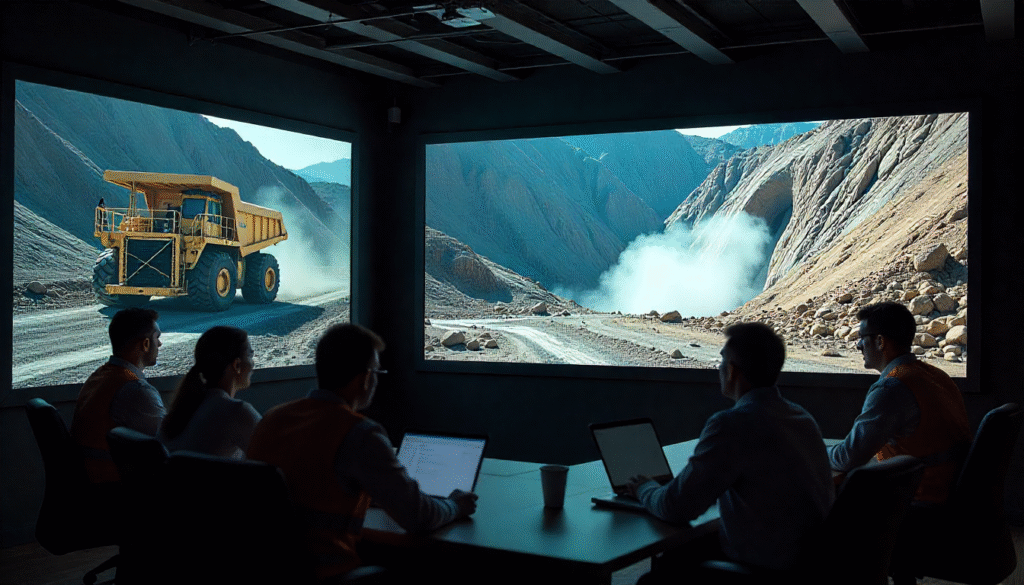
Imagine watching a full mining operation come to life on screen, seeing every stage unfold exactly as it would on site. This is now a reality for the Australian mining industry because mining companies use 3D animations to transform the way they plan, train, and communicate. Across gold and iron ore regions in Western Australia, including Perth, the Pilbara, and remote mining sites, teams are embracing realistic 3D engineering animation to improve clarity, safety, and decision-making.
Instead of relying on traditional 2D diagrams or long technical documents, mining teams can now visually demonstrate complex processes in a way that feels real, immersive, and easy to understand. Whether Rio Tinto is reviewing pit design or smaller contractors are showcasing equipment flow, 3D animation offers a powerful visual advantage that helps everyone see exactly what is happening on site. The result is stronger communication, better training outcomes, and more confident project planning.
How 3D Animation Is Transforming the Australian Mining Industry
The power of animation lies in its ability to take technical mining processes: drilling, blasting, haulage, ore processing, and turn them into visuals that anyone can understand. This is especially valuable in the mining and resources sector, where clarity is crucial. Australian mining industry, where engineers, stakeholders, investors, and contractors may all have different levels of technical knowledge.
Here’s what a mining project can achieve with effective animations for mining. realistic 3D engineering animation can do:
• Make Complex Processes Easy to Understand
Gold and iron ore extraction involves many moving parts. A single animation can simulate:
-
open-pit development stages
-
crusher and conveyor movement
-
ore processing workflow
-
safety zones and hazard areas
-
equipment installation
-
rehabilitation activities
This level of Visualization through 2D animations can complement the more detailed insights provided by 3D animations. allows decision-makers to see the full process rather than interpret it from text or 2D plans.
• Improve Stakeholder Communication
Mining companies often need to convey their plans to government bodies, traditional landowners, investors, and environmental groups. A visual, interactive 3D render helps:
-
remove confusion
-
shorten approval cycles
-
improve engagement
-
build trust
This is why companies like Rio Tinto have publicly highlighted the value of digital tools, modeling, and visualisation in modern mine planning.
• Support Safer Mining Sites
Training is one area where 3D animation has the biggest impact. Instead of explaining safety procedures in classrooms, trainers can use high-quality 3D simulations to visually demonstrate dangers.
Examples include:
-
emergency scenarios
-
machinery blind spot awareness
-
proper equipment handling
-
evacuation routes
-
hazardous environmental conditions
According to Safe Work Australia, effective training and hazard awareness significantly reduce workplace injuries.
Why Realistic 3D Visualization Matters for Gold & Iron Ore Operations
The gold and iron ore sectors in Australia operate on tight schedules and high production targets, especially across Western Australia’s major regions. Realistic 3D visualisation helps teams stay aligned, reduce errors, and solve problems before they happen.
1. Better Engineering Decisions
Engineers can test multiple scenarios using interactive 3D models, including:
-
alternative pit designs
-
equipment placement
-
stockpile configuration
-
Environmental impact layouts should incorporate technical 3D visuals to effectively communicate potential effects.
These visuals help predict bottlenecks, safety risks, and design flaws early—saving both time and cost.
2. Stronger Project Presentations
In mining, presentation matters, especially when using immersive 3d animation industrial techniques to convey information. When pitching expansion projects or proposing new mine developments, teams often rely on visual content to persuade stakeholders.
High-quality 3D engineering animations help decision-makers see the full picture, including equipment movement, environmental impact, site layout, and safety considerations, in a clear and engaging format. This visual clarity helps mining companies communicate complex ideas faster and with greater confidence.
3D animation allows companies to showcase:
-
conceptual mine layouts can be enhanced by utilizing a 3D animation studio to visualize the environment.
-
realistic 3D environmental views
-
infrastructure placement
-
water and waste management plans
A clear, realistic animation often communicates better than dozens of slides or technical PDFs.
3. Reduced On-Site Confusion
Mining sites are fast paced and can involve dozens of contractors. Visual workflows help reduce misunderstandings between:
-
engineers
-
machine operators
-
environmental teams
-
external consultants
A short animation created in an Unreal Engine can clarify what a 20-page manual cannot.
3D Animation vs 2D Drawings: Why Animation Wins
While 2D drawings still have their role, they cannot match the clarity of a 3D animation. Here’s why mining companies prefer animation:
| 3D Animation Advantages | 2D Drawing Limitations |
|---|---|
| Visually demonstrates complex processes | Harder for new workers to interpret |
| Creates an immersive experience for training and better engagement | Does not show depth or movement |
| Provides a realistic look at mining sites | Less effective for safety training |
| Offers interactive views for presentations | Not engaging for remote stakeholders |
| More relatable for non-technical stakeholders | — |
| Supports simulation of real-world scenarios | — |
Put simply: 2D shows the idea, 3D shows the reality.
How Perth-Based and WA Mining Companies Use 3D Animation
Across Perth and Western Australia, cinematic, crystal-clear visuals created through advanced 3D engineering animation are being used in:
• Mine Planning
Engineers use visualisation to plan pit stages and demonstrate long-term mining sequences.
• Safety Training
Sites use animations to simulate fire responses, machinery incidents, or hazardous areas.
• Environmental Approvals
Regulators respond better when they can visually see the project’s impact. It can be better understood through the use of technical 3D models and animations.
• Equipment Demonstration
Suppliers use animation to demonstrate installation, operation, and maintenance.
• Community Engagement
Traditional landowners and local communities appreciate realistic, visual explanations created by a Melbourne-based 3D animation studio instead of jargon-heavy documents.
What This Means for the Future of Australia’s Mining Industry
The role of 3d engineering animation in Australia’s gold & iron ore industry is growing rapidly as mining companies embrace more visual, immersive, and interactive ways to communicate. from safety procedures to stakeholder presentations, industrial equipment demonstrations are now being transformed through high-quality 3d animation. These visuals help the mining industry operate more safely, more efficiently, and with greater clarity.
Mining companies across Western Australia’s gold and iron ore operations are shifting away from long manuals and traditional slides. Instead, they use 3d engineering animation to show complex equipment movement, installation steps, risk points, and full operational sequences in a clear, realistic format. As the demand for clearer communication and better training increases, 3d animation will continue to play a major role in shaping the future of Australia’s mining industry.
If you could turn one complex mining task into a clear animation, which would you choose?
FAQs: Role of 3D Animation in Australia’s Gold & Iron Ore Industry
How is 3D animation used in mining?
3D animation is used to visually explain mine planning, equipment movement, safety procedures, and environmental layouts. It helps mining companies present technical information clearly.
Which mining companies in Australia use 3D visualisation?
Large companies such as Rio Tinto, BHP, and Fortescue use 3D visualisation for training, engineering, safety, and project communication.
Why is 3D animation better than 2D drawings for mining?
3D animation provides realistic, immersive visuals that clearly demonstrate processes, hazards, and equipment movement—something 2D drawings cannot show effectively.
Does 3D animation improve safety in mining?
Yes, realistic 3D simulations help workers understand risks, machinery blind spots, emergency procedures, and site layouts, reducing accidents and improving safety culture.
How much does mining animation cost?
Costs vary depending on complexity but typically range from $3,000 to $20,000+ depending on duration, level of realism, and level of engineering detail required.