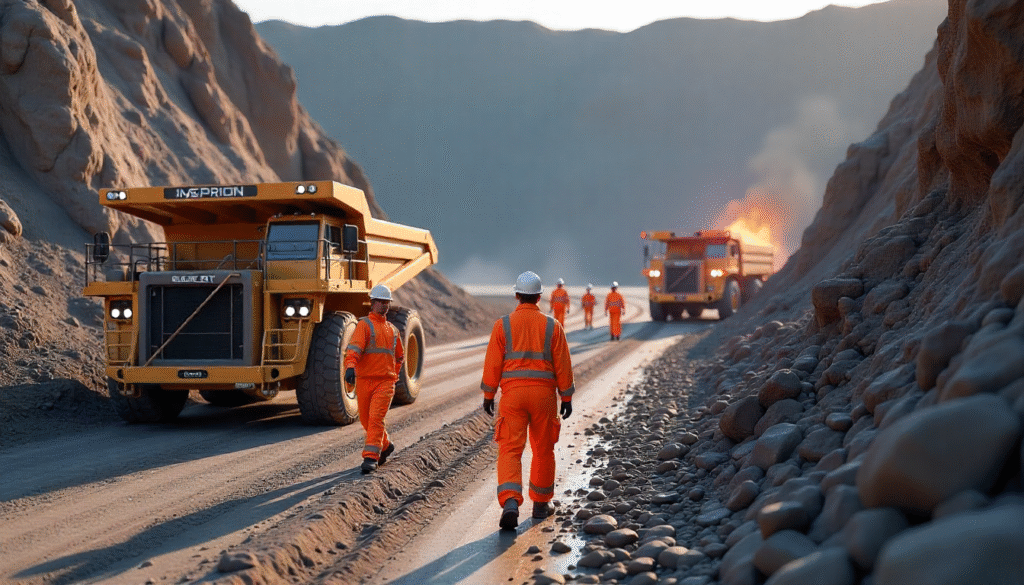
Have you ever sat through a long, traditional safety session and thought, There has to be a better way to learn this, perhaps through animation for the mining sector.? Many workers in the Australian mining sector feel exactly the same. Mining is fast-paced, high-risk, and full of hazards that cannot be fully understood through manuals or traditional classroom slides. Workers need training that feels real, shows dangers clearly, and prepares them for the unpredictable challenges they face every day on site.
That is why the mining sector is shifting toward mining animation, realistic 3d models, and immersive virtual environments. Instead of imagining how an incident might unfold, workers can see the entire scenario in action.
Across Western Australia, Queensland, and the NT, mining operations are already seeing a major improvement. VR training, digital twin simulations, and interactive 3d tools help workers build stronger safety habits and respond faster during emergencies.
This new wave of 3D visualization, supported by advanced industrial and engineering 3D animation, is far more than a technology trend. It is reshaping workplace safety, strengthening safety culture, and giving mining teams a safer way to learn inside a controlled environment before they step into real mining conditions.
How 3D Animation Is Transforming Mining Safety Training in Australia
Mining companies across Australia are now realising that traditional training methods often cannot keep up with the complexity of modern mining environments. Manuals, classroom instructions, and in-person training still have value, but they rarely show the full picture of hazardous situations like 3D animation can. Today, many mining companies in Australia use 3D animations to visualise risks, explain critical procedures, and deliver clearer safety instructions. This is where mining animation, 3D animation, visual training, and immersive VR tools are transforming how safety training works in the mining sector.
According to Safe Work Australia, mining remains one of Australia’s higher-risk industries. The mining industry recorded a serious claims incidence rate of 6.5 per 1,000 workers, along with a fatality rate of 2.4 fatalities per 100,000 workers, which is significantly higher than industries such as retail, education, professional services, and hospitality. Most serious injuries and fatalities in mining are linked to heavy machinery, vehicle incidents, and workers being hit by moving objects. These risks highlight why Australian miners benefit from visual safety content such as realistic 3D models, VR simulations, and animated hazard scenarios, which can help workers understand dangers before they step on site.
The Minerals Council of Australia emphasises that reducing incidents across mine sites requires continuous improvement in training, hazard control and industry competency. The MCA highlights that all fatalities, injuries and occupational illnesses are preventable, and that every hazard must be eliminated or controlled to minimise harm. This commitment drives mining companies to adopt stronger training practices, modern learning tools and advanced technologies that help workers better understand risks. As part of its national safety focus, the MCA encourages the use of improved training approaches and leading practice guidance to strengthen safety culture across Australian mining operations.
Across the mining sector, these modern training methods give workers clearer, more accurate 3d representations of mining operations. By showing hazards visually, they create a safer, more informed workforce and significantly improve safety outcomes across Australian mining operations.
How Mining Animation and Realistic 3D Training Materials Improve Safety Outcomes
Mining animation and realistic 3d training materials are changing the way mining companies prepare their workforce. Instead of relying on imagination or theory, workers can now see exactly how mining processes, heavy machinery, and hazardous situations unfold in real time. This creates stronger engagement, clearer understanding, and better safety performance across mining operations.
Here is how 3d animation makes a real impact:
1. Shows hazards clearly and accurately
Mining animation uses:
-
Accurate 3d models
-
Realistic movements
-
Precise site layouts
This helps workers identify potential hazards long before they step into real mining environments.
2. Turns complex data into simple visual content
Mining often involves detailed procedures and complex systems.
3D visualization makes these easier to understand by showing the mining environmental impact.
-
Equipment flow
-
Safety hazards
-
Step by step processes are essential in training simulations for effective learning.
- Equipment installation animation to show how machinery should be safely assembled or set up
-
Emergency scenarios
Workers learn faster because they are not guessing what something looks like.
3. Enhances knowledge retention
People remember more when they learn visually.
Training animation improves retention because it is tailored for the mining industry.
-
Visually compelling
-
Scenario based
-
Easy to follow training protocols are vital for effective learning in mining operations.
-
Realistic and practical
Studies consistently show that visual learning improves memory and response times during safety-critical events.
4. Helps workers understand heavy machinery
Mining operations rely on large, powerful, and often dangerous equipment.
Realistic 3d training materials show:
-
Blind spots
-
Interaction zones can be effectively demonstrated using 3D animation.
-
Equipment failures
-
Correct operating procedures
This reduces incidents caused by misjudgment around machinery.
5. Creates a consistent training experience
Whether a worker is new or experienced, training animation ensures:
-
Standardised safety information
-
Clear procedures
-
Consistent interpretation
-
Better compliance with safety programs
This consistency leads to improved safety outcomes across the mining sector.
6. Allows risk-free practice
Workers can explore hazardous situations in a safe, controlled environment.
They can:
-
Watch incidents unfold
-
Learn how to respond
-
Understand cause and effect
-
Practice decision making
This prepares them for real-world mining operations without exposure to danger.
How VR, AR, and Virtual Reality Simulations Create Immersive Learning Experiences
VR, AR, and virtual reality simulations are becoming essential tools for mining operations because they place workers inside a realistic 3d environment where they can learn by doing, not just by listening. These immersive technologies in mining help workers understand hazards, practice procedures, and build confidence long before they enter a real site.
Here is how they enhance training:
1. Immersive learning creates stronger engagement
With VR training, workers can:
-
Walk through a virtual mine
-
Interact with heavy machinery
-
View hazards from multiple angles
-
Explore restricted or dangerous zones safely
This level of immersion keeps workers focused and makes training sessions far more memorable.
2. Perfect for high-risk or hard-to-reach locations
Some areas of a mine are too dangerous for onsite training.
VR and AR allow companies to simulate:
-
Underground hazards
-
Machinery failures
-
Fire safety scenarios
-
Emergency evacuations
All without exposing workers to real danger.
3. Helps new workers join faster
For inexperienced workers, VR and AR remove the guesswork.
The virtual environment shows:
-
Where risks occur
-
How mining processes flow
-
How to avoid hazardous situations
This makes onboarding smoother and safer.
4. Enhances visual communication
Some safety concepts are difficult to explain verbally.
Immersive tools turn these into:
-
Interactive 3d examples
-
Clear animations
-
Simple, visual steps
This level of clarity is essential for effective safety training.
How Digital Twins Help Mining Companies Plan Safer Projects
Digital twins are becoming one of the most important technologies in mining operations because they allow companies to create a living, accurate 3d replica of their site. This replica updates continuously and helps teams plan, simulate, and test safety procedures without entering hazardous environments.
A digital twin does more than show a 3d model. It connects real-time data, environmental conditions, machinery performance, and mining processes into one visually compelling platform. This gives mining teams better situational awareness and improves their ability to predict risks before they affect workers.
To show how powerful this shift is, here is a comparison of traditional planning approaches and digital twin–enhanced planning:
Traditional Planning vs Digital Twin Planning in Mining
| Traditional Training & Planning | Digital Twin–Enhanced Planning |
|---|---|
| Relies on static diagrams, 2D plans, and verbal explanations | Uses accurate 3d models and real-time site data |
| Hard to visualise ground conditions, machinery paths, or hazard zones | Shows realistic 3d layouts, terrain, hazards, and equipment movement |
| Safety hazards often identified late during operations | Hazards identified early through simulation and scenario testing |
| Emergency procedures practiced theoretically | Emergency procedures tested inside a controlled virtual environment |
| Limited ability to predict equipment failures or unsafe interactions | Predictive analytics highlight high-risk areas and potential failures |
| Difficult to create consistent training across teams | Standardised, high-quality training modules with identical visuals for everyone |
| Accident prevention depends heavily on individual interpretation | Visual communication ensures all workers understand risks clearly |
Moving Forward with Safer, Smarter Mining Training
So, what does all this really mean for the mining sector? It means the days of relying only on thick manuals and classroom slides are fading. Workers learn faster, remember more, and stay safer when they can actually see what mining hazards look like. That is exactly what 3D animation, VR simulations, digital twins, realistic 3D training materials, and even specialised 3D animations for engineering deliver for the mining industry. They turn confusing procedures into clear, visual training experiences that prepare workers long before they step into a real mining environment.
When teams can walk through a virtual mine, watch hazardous situations unfold in a controlled environment, and practise responding to emergencies risk free, safety performance naturally gets stronger. It builds confidence. It builds awareness. And most importantly, it builds a safety culture that sticks.
If your mining operations are ready to improve training outcomes, enhance compliance, and give your workforce a more effective way to learn, now is the right time to explore modern visual training solutions.
What part of your mining safety training do you think could improve the most with 3D animation? Share your thoughts in the comments.
Frequently Asked Questions About 3D Animation for Mining Safety Training
What is 3D safety training animation for mining?
3D safety training animation for mining uses realistic 3d models, visual content, and animated safety videos to show workers how mining processes, heavy machinery, and hazardous situations look in real life. Instead of reading manuals, workers watch visually compelling sequences that demonstrate best practices, safety procedures, and critical safety steps in a clear and engaging way. This improves knowledge retention and helps workers understand how to respond in high-risk environments.
How do 3D mining animations improve mine planning and safety?
3D mining animations improve safety by showing accurate 3D representations of the site, including hazard zones, vehicle paths, equipment movement, and environmental risks, which are critical for safety protocols. Mining companies can use these animations to identify potential hazards early, test emergency procedures, and simulate complex mining processes before actual operations begin. This supports better planning, fewer mistakes, and stronger safety performance across mining operations, particularly in mining projects often involving complex protocols.
Can e-learning replace in-person safety training in the mining sector?
E-learning cannot fully replace in-person onsite training, but it can significantly enhance it. 3d animation, vr training, and interactive 3d modules prepare workers before they enter the field. When combined with traditional hands-on training, these digital tools create a blended approach that improves understanding, confidence, and safety outcomes across the mining industry.
Can these animations include interactive elements?
Yes. Modern mining animation can include interactive 3D environments, clickable hotspots, hazard-identification tasks, and full VR training experiences using a headset. Workers can walk through virtual mines, practise responding to hazardous situations, explore heavy machinery zones, and test their decision-making skills in a controlled environment. This makes training sessions far more effective than passive learning methods.
How long does it take to develop a mining safety animation?
The development timeline depends on the complexity of the mining processes, the style of animation, and whether VR or digital twin elements are included in the specific training. A simple animated safety video may take a few weeks, while a full training module with advanced 3d models, interactive elements, and realistic site replicas can take several months. The result, however, offers long-term value by improving safety culture, compliance, and overall training outcomes through animation for the mining sector.